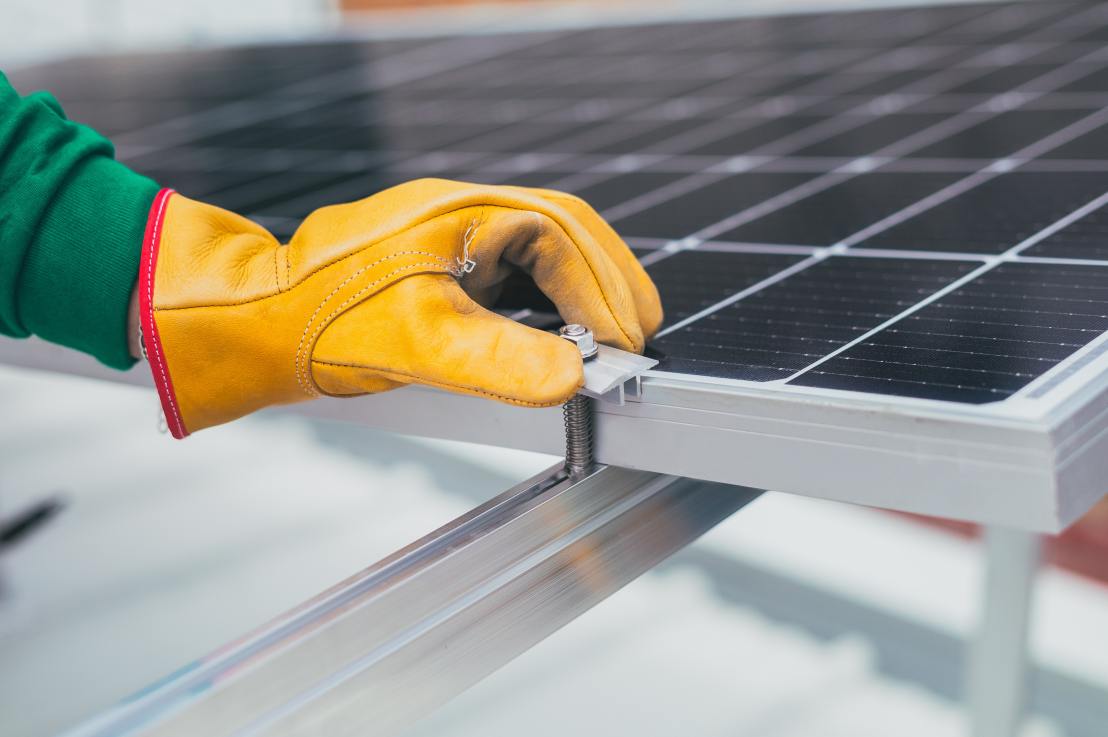
The emergence of 500-watt solar panels demonstrates that solar technology is becoming more powerful. At least seven major solar panel manufacturers now produce this size of solar panels
500 watts (or 500 W) for a single solar panel is a very high amount of production. In 2022, industry-standard will require home panels to produce between 350 and 400 W.
As a result, 500 W solar panels are rather large. Are they, nevertheless, superior?
In this post, we’ll tell you all you need to know about 500 W solar panels, including if they’re worth it for your house.
What is a 500-watt solar panel?
Under Standard Test Conditions, a 500-watt solar panel has a power rating of 500 watts (STC).
STC is an industry-standard that entails evaluating panel performance in a lab under 1,000 lumens/m2 of light and at 77°F (25°C) temperature. It shows how much electricity a solar panel can produce under optimal sunshine and temperature conditions.
What about production in the actual world? A 500-watt solar panel will typically create roughly 2 kWh of daily power and 731 kWh of yearly energy. Keep in mind that the actual power output you observe will vary depending on various factors.
How efficient are 500-watt solar panels?
In terms of efficiency, the 500 W solar panels we looked at all have module efficiency ratings of roughly 21%.
A typical household system with 6 kilowatts (kW) of solar capacity would require twelve 500 W solar panels. A 6 kW system with standard 375 W modules would need 16 panels.
What is the size of a 500-watt solar panel? (Size and number of cells)
144 half-cut monocrystalline cells are often used in 500-watt solar panels.
A single 500 W panel has a typical size of 27.5 square feet (7.40 feet x 3.72 feet).
Each 500 W panel weighs roughly 71.2 lbs (32.3 kg) in terms of weight.
As a result, 500 W panels are relatively large and hefty, making them more suitable for commercial applications.
 Go Solar Today