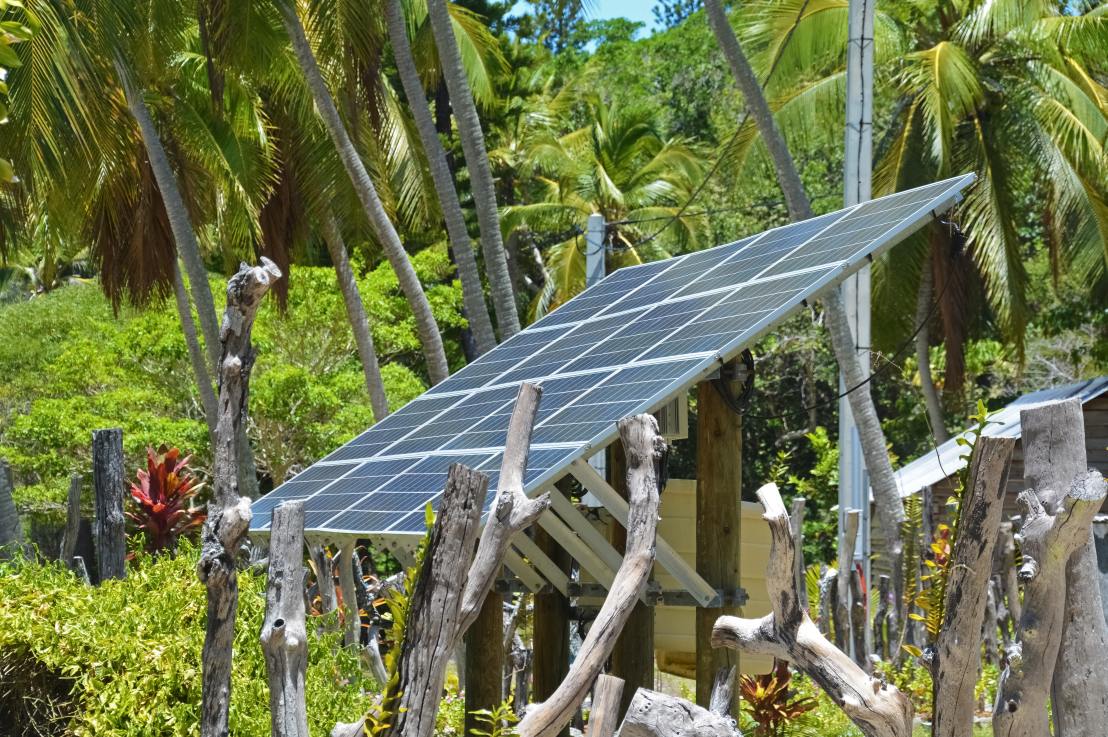
While you’re interested in sustainable energy sources and are aware of solar panels, you may not be familiar with solar arrays. You’re in the correct place, so don’t worry. You can find everything you need to know about solar panels in this article, including their costs and suitability for your home.
What is a solar array?
A solar array is a group of solar panels that harness sunlight and generate power. A complete solar power system consists of solar arrays, one or more solar inverters, and a battery if desired.
A solar array produces electricity as part of the solar power system, which you can use to power your home.
What materials make up solar panels?
A solar array consists of several solar panels that have been connected in a circuit.
In turn, solar panels are made up of several photovoltaic (PV) solar cells enclosed in safety glass and supported by a metal frame. Thinly sliced semiconductor material, usually silicon, is used to make solar cells.
The photovoltaic process is how individual solar cells produce electricity. Photons from sunlight separate silicon’s electrons, creating an electric charge. Because of this procedure, solar panel systems are often referred to as “PV systems.”
The required system size and the desired power output, or wattage, of each panel determine the number of solar panels employed. For instance, a 7,000-watt (7 kW) household solar system might be constructed using either 19 solar panels with a 375-watt output or 28 solar panels with 250-watt output.
How much are solar arrays?
In the United States, a whole residential solar panel system typically costs between $18,000 and $20,000. According to our cost statistics, this amount is based on a pre-incentive cost of $2.75 to $3.35 for each installed solar power watt.
The solar array’s equipment will take up between $5,800 and $7,850 of that total.
The cost of the solar inverters and the installation itself make up the majority of the remaining overall system cost.
 Go Solar Today