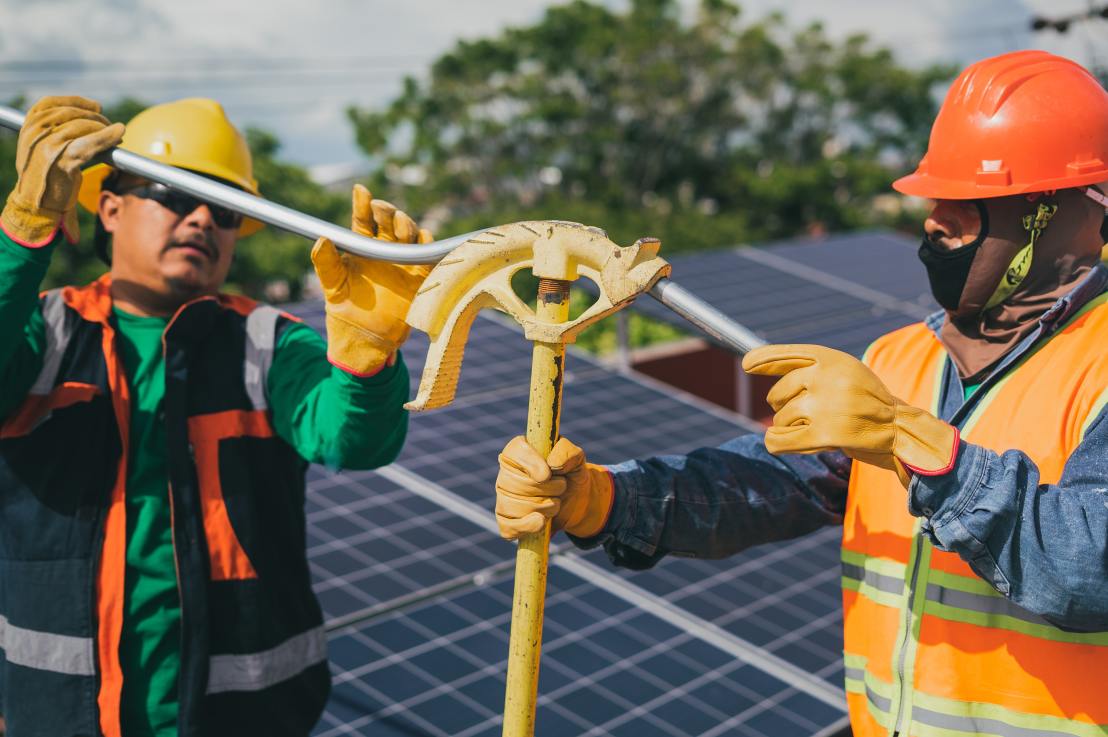
Make sure your roof is sturdy and capable of supporting the system’s weight before beginning a rooftop solar installation.
Weight of solar panels on your roof
20 panels would make up a 6-kilowatt solar array, and the panels themselves would weigh about 800 pounds. 352 square feet would be around the total area covered. On a slanted roof, this equates to around 2.3 pounds per square foot and about 5 pounds on a flat roof.
The overall weight of the solar system is around 3–4 pounds per square foot when you add the solar panels and all of the mounting hardware, racking, junction boxes, and cabling (this does not include the inverter, which usually gets bolted to the wall). This is comparable to a set of work boots or a half-gallon milk container.
Most roofs are capable of supporting the weight.
Most of the time, installing typical solar panels on your roof won’t put too much strain on it. Your roof should be OK because they made it to handle up to 20 pounds of snow per square foot before being strained, according to the Insurance Institute for Business & Home Safety (IBHS). Therefore, the extra 3–4 pounds the solar panels add won’t matter.
What about the additional snowfall that accumulates on top of your solar panels? The good news is that snow may help clean your solar panels, according to the Office of Energy Efficiency & Renewable Energy, so your roof can handle the extra weight (and rain does the same thing).
But if you have any worries, make sure to get your roof inspected.
Ask a roofing business about having a structural engineer evaluate your roof if you own a house with an older roof or are worried that it won’t support the additional weight. If something were to go wrong with your roof, damaging your solar panels or mounting gear, you might use this to assess whether your roof can hold the increased weight of the panels without voiding your warranty.
 Go Solar Today